In a stunning legal upheaval, the U.S. Supreme Court has delivered a seismic blow to President Trump’s administration, effectively dismantling his expansive claims of executive power. In a landmark 7-2 ruling late last night, the Court struck down numerous executive orders issued by Trump, labeling them unconstitutional and a violation of the separation of powers. This ruling, described by analysts as a “constitutional neutron bomb,” has immediate and far-reaching implications for Trump’s governance and the future of presidential authority in America.
 The Supreme Court’s decision directly overturns Trump’s efforts to federalize state National Guard units and exert unilateral control over independent agencies. The ruling halts over 30 executive orders, creating what insiders are calling “administrative paralysis” within the White House. Federal agencies now face the daunting task of reverting to pre-Trump operations, leading to chaos and uncertainty across the government.
Chief Justice John Roberts, in a powerful statement, warned that unchecked executive authority threatens the very foundation of the republic. His remarks signal a profound judicial check on presidential overreach, echoing the historic case of United States v. Nixon, which reinforced the principle that no president is above the law. The Court’s decision, which included votes from three justices appointed by Trump himself, underscores the gravity of the situation, with even his allies recognizing the limits of executive power.
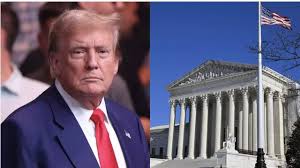
Justice Amy Coney Barrett, another Trump appointee, concurred, emphasizing that no president may nullify congressional authority through executive decree. This rebuke of Trump’s governance style reveals a growing consensus among justices that his approach poses a significant threat to constitutional democracy.
As the ruling sends shockwaves through the political landscape, Trump faces a critical juncture in his presidency. Already beset by numerous scandals, including investigations into his administration’s conduct, the Supreme Court’s ruling strips him of key tools to implement his agenda. The implications are profound: Trump’s ability to govern effectively is now severely curtailed, forcing him to navigate the complexities of working within constitutional constraints rather than relying on unilateral actions.
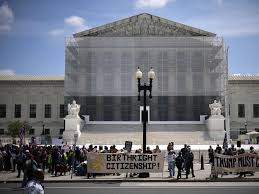
The immediate fallout from this ruling is likely to trigger a wave of legal challenges and congressional investigations. Democrats are poised to leverage this decision as proof of Trump’s constitutional violations, potentially leading to intensified scrutiny of his administration’s actions. As the dust settles, the political ramifications could reshape the landscape heading into the 2026 midterms, with voters now acutely aware of the judicial limits placed on Trump’s presidency.
This historic ruling not only checks Trump’s power but also establishes a crucial precedent for future administrations. By reaffirming the boundaries of presidential authority, the Supreme Court has taken a significant step to safeguard American democracy against potential authoritarianism. As the nation grapples with the implications of this ruling, one thing is clear: the era of unchecked executive power has come to an abrupt end, and the reverberations will be felt for generations to come.