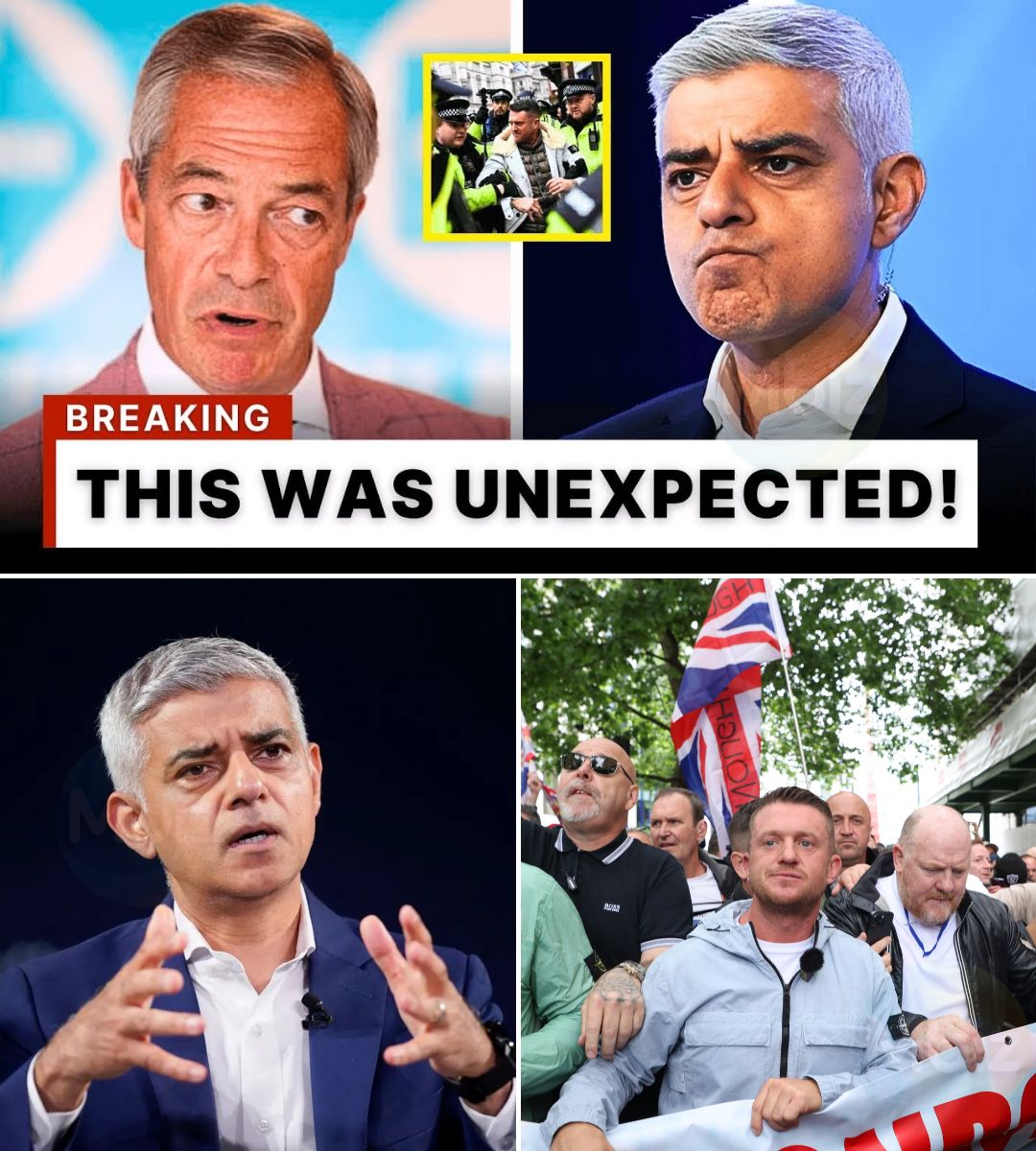
In a 𝓈𝒽𝓸𝒸𝓀𝒾𝓃𝑔 confrontation that has sent ripples through the British political landscape, Tommy Robinson publicly humiliated London Mayor Sadiq Khan during a rally in East London, accusing him of failing the city amid rising crime and violence. The incident, captured live and broadcast across social media, has ignited an intense debate about political accountability, with Nigel Farage swiftly entering the fray to voice the frustrations of many who feel abandoned by their leaders. As the video of the confrontation goes 𝓿𝒾𝓇𝒶𝓁, the implications for the political establishment are profound and unsettling.
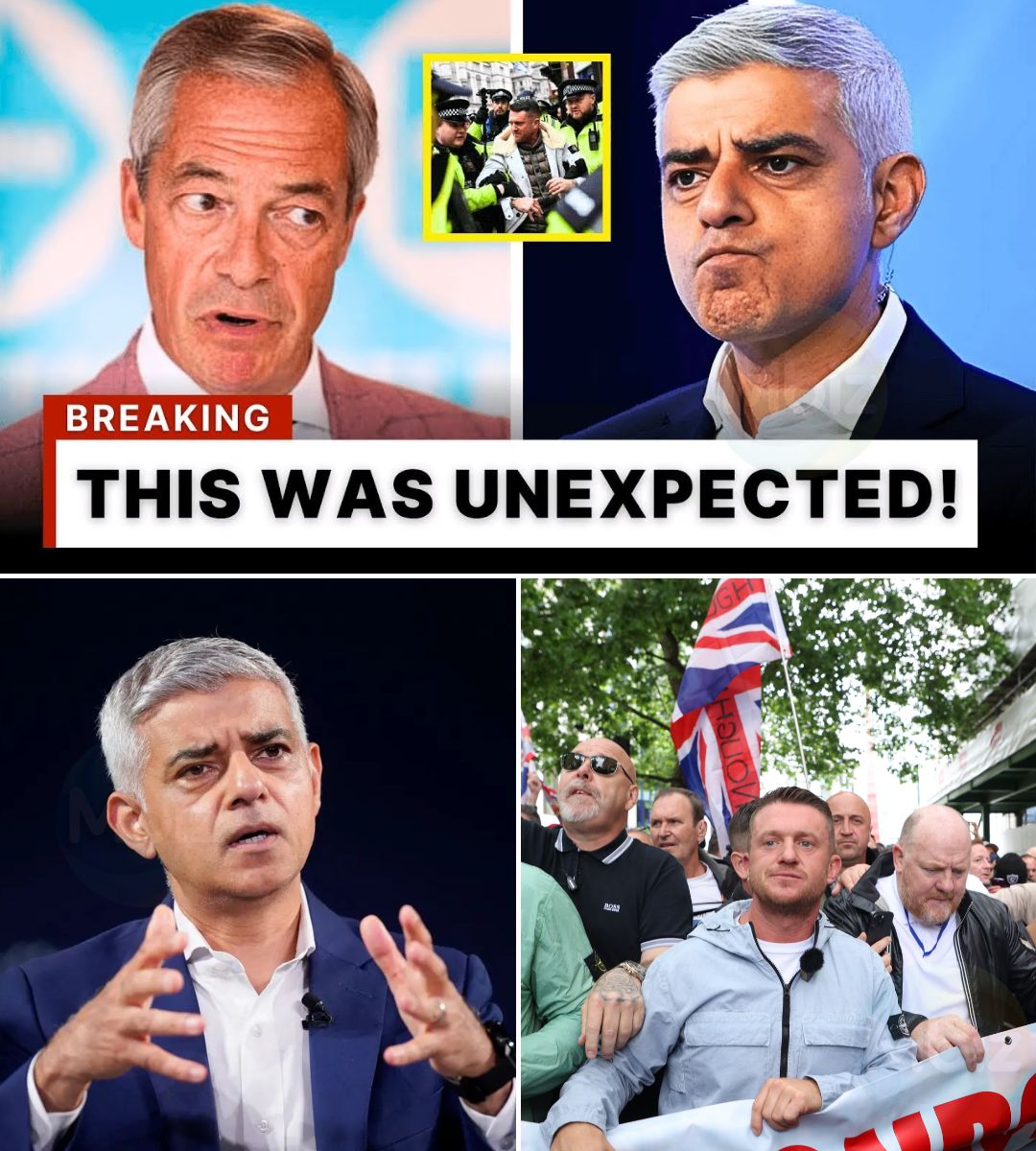
The atmosphere was electric as Robinson stood before a crowd, armed with crime statistics and personal testimonies, challenging Khan’s leadership head-on. This was not just another protest; it was a visceral moment of accountability that many have long demanded. Robinson’s accusations struck a chord with the audience, dividing them between cheers and gasps, but uniting them in their desire for change.
Farage, watching from the sidelines, wasted no time in addressing the situation. Going live on GB News, he proclaimed that the public feels neglected and that leaders ignoring this anger will inevitably face consequences. His remarks resonated deeply, and social media exploded with hashtags like #FarageSpeaksOut and #LondonUprising, indicating widespread public engagement and concern.
 Khan’s silence in the wake of the confrontation speaks volumes. No press conference, no rebuttal—just an attempt at damage control from his office, which attempted to downplay the incident as a mere stunt. However, with nearly two million views on the video within 48 hours, it is clear that this moment is anything but trivial.
Insiders from both Labour and the Conservative Party are reportedly alarmed, with one anonymous MP acknowledging Farage’s keen understanding of public sentiment. The fear is palpable: the establishment is losing touch with the very people it represents. Robinson’s bold stance has awakened a sense of urgency among working-class Brits, who are increasingly disillusioned with political rhetoric that dismisses their fears.

This is not just a London issue; it reflects a nationwide awakening. Communities from Birmingham to Bradford are watching, and the establishment’s greatest fear is becoming a reality: the so-called fringe is now mainstream. Robinson’s confrontation has sparked a political awakening that could reshape the future of British politics.
 Robinson’s powerful words—calling London a “playground for criminals”—resonated deeply. His piercing critique of the political class, which he accused of being “asleep at the wheel,” has struck a chord with those who feel their voices have been silenced. The tension is rising, and with Farage now amplifying these sentiments, the fuse has been lit.
As the dust settles, one thing is clear: the political landscape in the UK is shifting. If mainstream leaders continue to ignore the growing discontent, they may find themselves replaced by new voices demanding accountability and change. The stakes are high, and the public is watching closely. Will this confrontation mark a turning point in British politics? Only time will tell, but the urgency for action has never been more pronounced.


