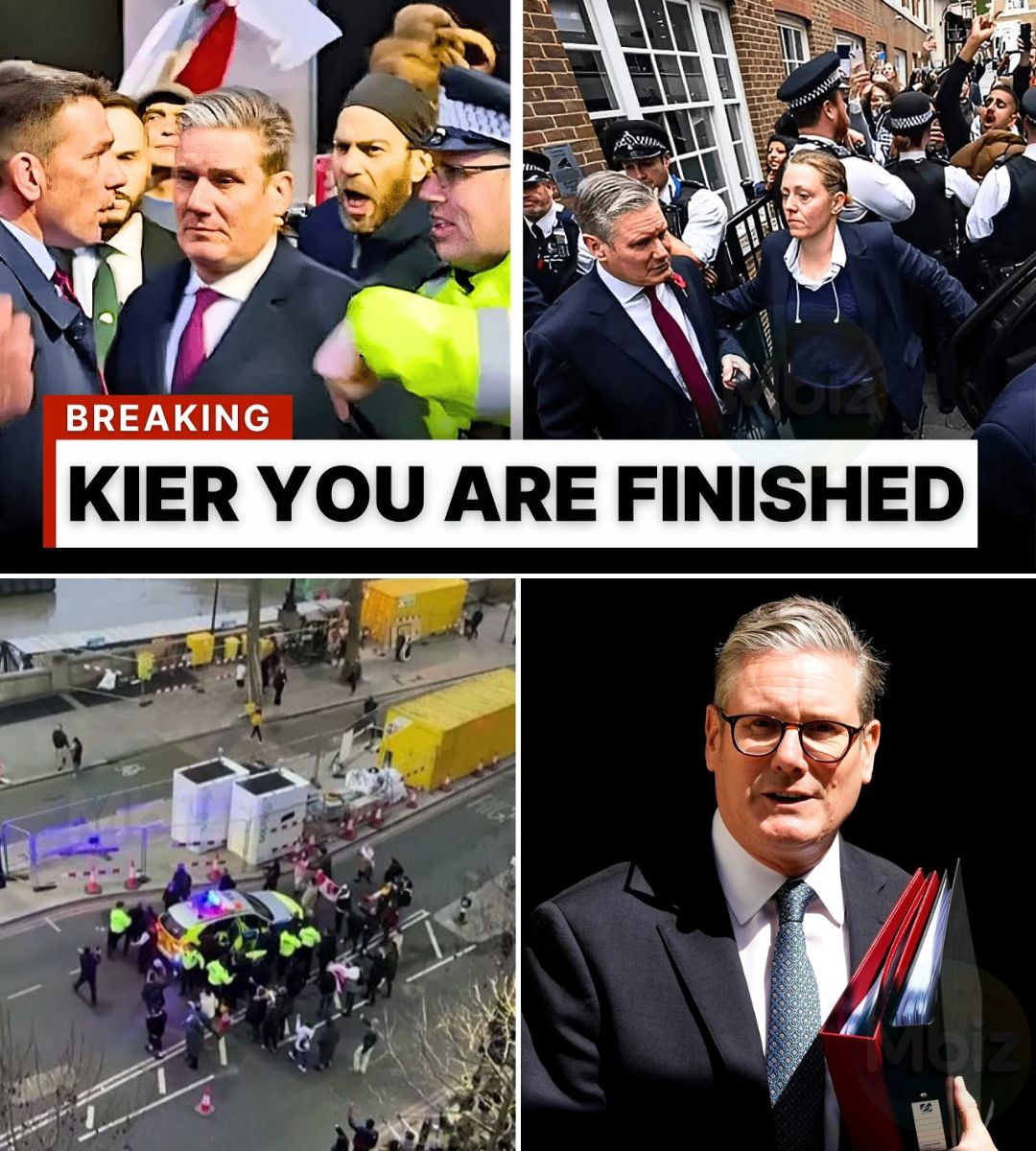
Keir Starmer, the leader of the Labour Party, faced an explosive backlash just moments ago as he attempted to address a crowd outside Parliament. Instead of the anticipated applause, he was met with a chorus of boos and shouts of “traitor” from angry protesters. The atmosphere quickly turned hostile, showcasing a profound discontent among his own supporters. Starmer’s speech, intended to solidify his leadership, instead spiraled into public humiliation, revealing deep fractures within the party and raising urgent questions about his future.
 As Starmer stepped onto the stage, he likely expected a warm reception, but the reality was starkly different. The crowd was not only unwelcoming but visibly frustrated. Skeptical glances and folded arms greeted him, signaling a brewing storm of discontent that would soon erupt.
His attempt to discuss pressing issues like the economy and Brexit fell flat, met with blank stares rather than the nods of approval he had hoped for. The tension escalated sharply when he addressed the Israel-Gaza conflict, asserting his opposition to a ceasefire. The first boo rang out, slicing through his words and marking the turning point of the event.
 Starmer’s demeanor shifted as he struggled to regain control of the room. The crowd transformed from skeptical to openly hostile, with voices demanding answers. “What about the children’s care?” one woman shouted, echoing the growing frustrations of the crowd. The atmosphere shifted from uneasy silence to palpable outrage.
In a shocking display of dissent, rows of attendees began to walk out, some hurling boos as they exited. Starmer’s leadership, once seen as a stabilizing force for the Labour Party, now appeared precarious. His failure to connect with the audience underscored a growing rift between him and the base he is supposed to lead.

Behind the scenes, Labour insiders are reportedly anxious, with whispers of potential leadership challenges echoing throughout the party. Starmer’s recent political missteps have left many questioning his ability to unite a fractured party and regain the trust of disillusioned supporters.
 The fallout from this event is likely to be severe. Starmer’s approval ratings have already begun to slip, and this latest debacle could push them further down. With Labour’s core values seemingly compromised, the party is at a crossroads, struggling with its identity and direction under Starmer’s leadership.
As grassroots Labour members express their outrage online, the question looms: can Starmer recover from this public rejection, or is this the beginning of the end for his leadership? The urgency of the situation is palpable, and the pressure is mounting for him to take decisive action to restore faith among his supporters.
Starmer’s political future hangs in the balance as he grapples with the fallout from this disastrous event. The boos outside Parliament were not just a momentary setback; they signal a deeper crisis within the Labour Party that he must address immediately. Will he adapt and change course, or will the backlash continue to grow, threatening his position at the helm of the party? The coming days will be crucial in determining the trajectory of Starmer’s leadership and the future of Labour.


